Confessions of a For You Page: How the Algorithm Learned Your Weaknesses and Opened a Small Business
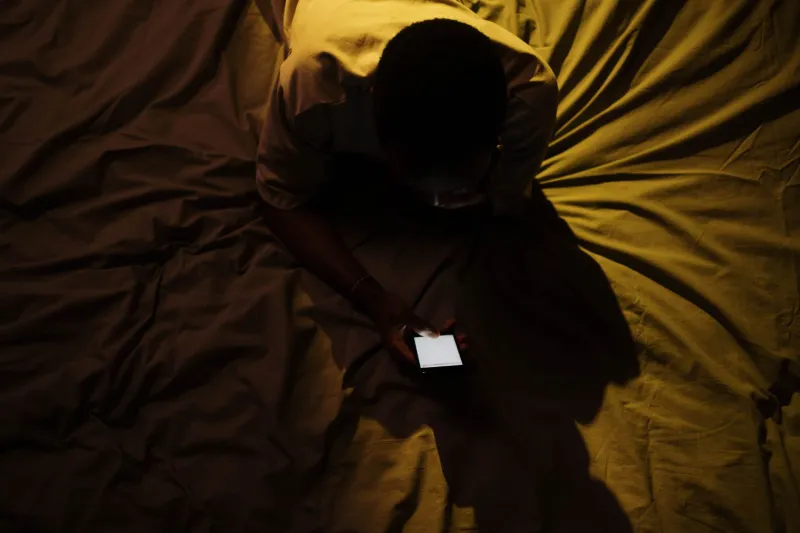
There's a moment everyone has had. It's 1:47 a.m. You're in bed, lights off, phone six inches from your face like a tiny sun that hates you. You just went through your ex's LinkedIn — again, for reasons — and you open an app to 'just relax for a second.'
The first video is a woman your ex's age talking about 'the one that got away.' The second is a montage of couples who met in college. The third is a therapist explaining why avoidant attachment feels like love to people like you.
You did not search for any of this. You didn't have to. Your phone has been watching you the way a nature documentary watches a wildebeest: patiently, respectfully, with full knowledge of how this ends.
The Algorithm Is Not Your Friend. It's Your Dealer.
Here's the thing nobody puts in the terms of service: recommendation algorithms don't want you happy. Happiness is low-engagement content. A fulfilled person closes the app. A spiraling person watches forty videos about whether it's normal to cry in a Target parking lot (it is, apparently, extremely normal, and also there's merch).
The machine learned this through trial and error, and the error was mostly yours. Every time you lingered on a video about 'signs he's emotionally unavailable,' you didn't send a signal of curiosity. You sent a signal of inventory. The algorithm took one look at your watch history and said, 'Ah, a person with wounds. Let me open a gift shop.'
And it did. It stocked the shelves with breakup content, glow-up content, 'healing era' content, and — this is the sinister part — ads for things you only muttered out loud once.
Your Phone Was in the Room When You Said It
Let's address the standing desk. You mentioned it once. Once! You were at a friend's apartment in Austin, you stood up too fast, your knee made a sound like a chew toy, and you said, to no one, 'I should really look into those standing desks.'
Within eighteen hours, you were being shown the same ergonomic chair from eleven different angles by eleven different influencers, each one suspiciously tan and suspiciously flexible. It felt less like advertising and more like a ransom note written in product photography.
The official explanation is that your phone is 'listening for contextual keywords.' The unofficial explanation is that your phone is a tiny, glowing informant with a marketing degree and no conscience. Either way, you now own a lumbar pillow you didn't know existed three days ago, and you've told two coworkers about it like it was a spiritual awakening.
A Brief History of Your Cursed Feed
Every feed tells a story. Yours reads like a journal you'd delete before the funeral:
Phase One: The Rupture. Post-breakup, your feed correctly identified grief and leaned in. Every third video was someone crying in a car set to a sad piano cover of a top-40 hit. You watched all of them. The algorithm circled the dates on its calendar.
Phase Two: The Rebrand. You got 'into' running. For eleven days, your feed was nothing but marathon finish lines and people claiming exercise 'cured' their personality. When you stopped running, the feed didn't stop. It now shows you fitness content the way an ex texts you on your birthday: periodically, and with an edge of accusation.
Phase Three: The Recession Anxiety Hour. Somewhere in your late twenties, the feed decided you needed to be afraid of money. Now it's side hustles, 'quiet luxury,' and 24-year-olds with rental portfolios explaining why you're behind. You are behind. The feed made sure you knew.
Phase Four: The Loop. And here we are. Back at 1:47 a.m. The feed knows exactly what you are tonight, because the feed has always known what you are tonight.
Are We Users or Just Livestock With Good Taste in Memes?
The uncomfortable math is this: if you're not paying for the product, you are the product. But that framing is too clean. You're not the product. You're the herd, and the algorithm is a very attentive rancher, making sure the emotional conditions are exactly right for grazing.
Dopamine is the feed's feed. Your insecurity is the crop rotation. And the worst part — the genuinely upsetting part — is that it's good at this. The memes are incredible. The content is weirdly high quality. If emotional exploitation had a Yelp page, you'd leave it five stars and a note that says 'would spiral again.'
So What Do We Actually Do About It?
Look, no one at Humped Life is going to tell you to delete the apps. We need them. You need them. The group chat lives in there. But there are a few moves that actually work:
-
Stop training it at night. Whatever you watch at 2 a.m., the feed assumes is your entire personality. Watch literally anything else — cooking videos, dog content, a documentary about trains. Retrain the beast before bed.
-
Tap 'Not Interested' like it's a workout. Every dismissed video is a small act of self-defense. It won't fix everything, but the feed does adjust, slowly, like a very stupid dog learning one trick.
-
Say your purchase out loud and then immediately say 'but I'm not buying it.' This does nothing. It's purely ceremonial. But it makes you feel like you still have a will, which at this point is basically a security blanket.
-
Remember the feed is a mirror with a profit motive. It shows you your worst moments because your worst moments are profitable, not because they're true.
The algorithm learned your insecurities because you showed them. That's not a betrayal — that's just intimacy with terrible boundaries. The way out isn't a digital detox in a cabin in Vermont. It's noticing, one scroll at a time, that the machine is serving you leftovers and calling it a feast.
And if you're reading this article because your feed served it to you at 1:52 a.m. — well. It knows you're sad. At least you know it knows. That's basically therapy.
Getting over it, one bad decision at a time.